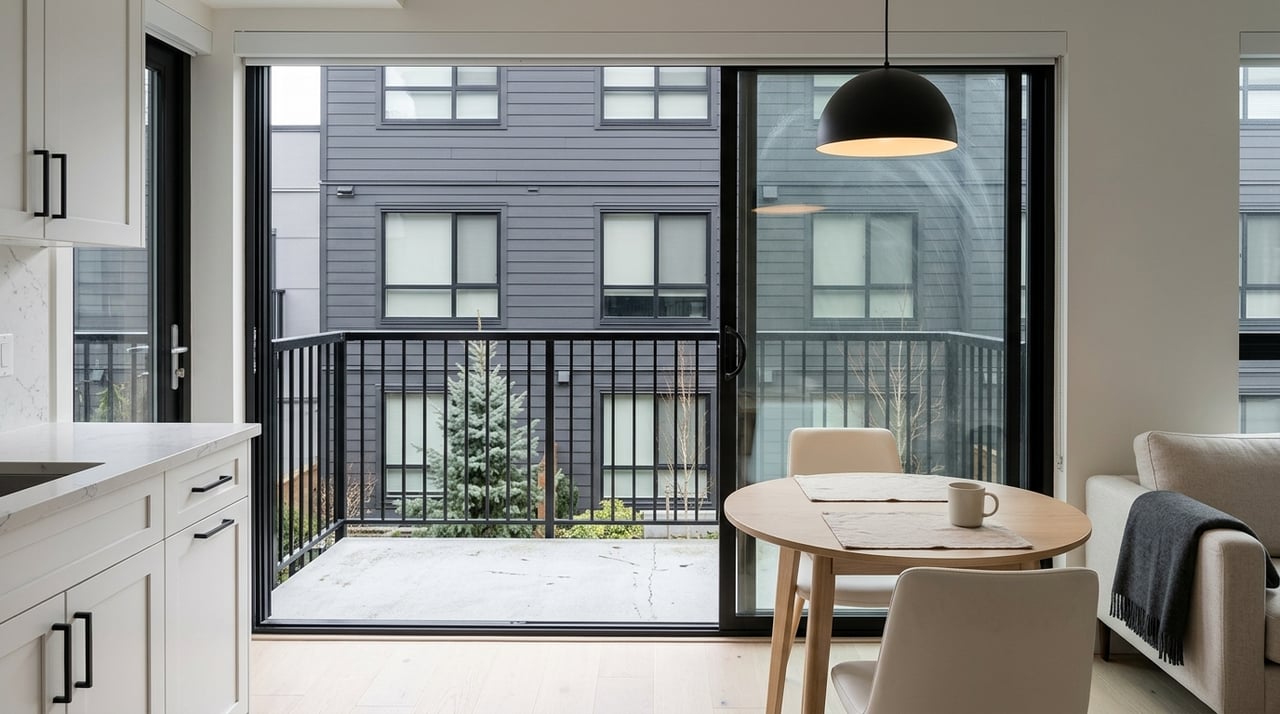
Choosing between a condo and a house in Downtown Anchorage can feel harder than it looks. At first glance, the answer might seem to come down to price, but downtown living adds a few extra layers like parking, walkability, monthly dues, and how much upkeep you want to handle yourself. If you are trying to decide which option fits your budget and lifestyle best, this guide will help you sort through the tradeoffs with confidence. Let’s dive in.
Why Downtown Anchorage Feels Different
Downtown Anchorage is more compact and walkable than many buyers expect. The area covers about 120 blocks, and trails, cafes, shops, parks, and major attractions are often within a 10-minute walk. That makes your day-to-day experience a real part of the housing decision, not just the home itself.
Transit also matters more here than in many other parts of Anchorage. People Mover Route 40 connects the Downtown Transit Center with the airport via Spenard Road, which can make car-light living more realistic. If you want to rely less on driving, a downtown condo or house may support that goal better than homes in more auto-dependent areas.
Condo vs House: The Core Difference
At a basic level, a condo gives you ownership of your individual unit plus shared ownership of common areas with other owners. A house usually gives you more direct control over the structure and lot. That difference affects your maintenance, your monthly costs, and how many decisions you make on your own.
For many buyers, the choice is less about which property type is better and more about which responsibilities you want to keep and which ones you would rather share. In Downtown Anchorage, that question becomes even more important because parking, exterior upkeep, and storage can vary widely from one property to the next.
What You Get With a Condo
A condo can be a strong fit if you want a downtown lifestyle with less day-to-day exterior maintenance. Condo owners typically pay a monthly fee that helps cover building exterior maintenance, common areas, and sometimes insurance, utilities, or reserve funding. That shared structure can make ownership feel more predictable in some ways, especially if you do not want to personally manage every exterior repair.
But condo ownership also means shared governance. Under Alaska law, condo associations are required to maintain and insure common elements, create annual budgets, and keep financial records. That means the health of the association matters almost as much as the condition of the unit.
Condo advantages to consider
- Lower-entry-price potential compared with many single-family options citywide
- Shared responsibility for exterior maintenance and common areas
- A lifestyle that often pairs well with walkability and transit access
- Less direct responsibility for some building-related upkeep
Condo tradeoffs to watch
- Monthly condo dues are separate from your mortgage in most cases
- Dues can increase over time
- Special assessments can create large one-time costs
- Association rules and financial health can affect both daily living and resale
What You Get With a House
A house usually gives you more independence. You are generally making more of the decisions about maintenance, repairs, and how the property is used. If control matters to you, that can be a major advantage.
That control also comes with more direct responsibility. Single-family home maintenance typically includes planning for the exterior structure, plumbing, electrical, HVAC, and areas like garages, attics, or basements. In practical terms, you may have more flexibility, but you are also more likely to be the one coordinating and paying for upkeep as it comes up.
House advantages to consider
- More direct control over the property
- More flexibility around maintenance and improvements
- Less reliance on association governance
- Potentially better fit if parking, storage, or private outdoor use matters a lot to you
House tradeoffs to watch
- More hands-on maintenance responsibility
- More seasonal upkeep to plan for directly
- Fewer opportunities to shift exterior costs into shared monthly dues
- Downtown inventory can be more limited and variable
Price Is Only Part of the Story
Recent market data show why the decision is not just about headline price. In March 2026, Redfin reported Downtown Anchorage’s median sale price at $209,000, while Anchorage overall was $410,000. Citywide, single-family homes were at $505,000 and condo/co-ops at $276,450.
Those numbers are useful, but they do not answer the condo-versus-house question on their own. Downtown pricing can vary a lot by building, location, parking setup, and property type. A lower purchase price can still lead to a higher monthly cost if dues, assessments, taxes, or parking expenses stack up.
Compare the Monthly Cost Carefully
When you are deciding between a condo and a house, your monthly housing cost matters more than the sticker price alone. Condos often come with dues that are paid separately from the mortgage. Those dues can range from a few hundred dollars per month to more than $1,000, and they may increase over time.
Houses may not have condo dues, but that does not mean they are automatically cheaper to carry. You may need to budget more for repairs, seasonal upkeep, and systems maintenance. A smart comparison looks at your full monthly and annual ownership picture, not just principal and interest.
Costs to compare side by side
- Mortgage payment
- Property taxes
- Homeowners insurance
- Condo dues, if applicable
- Possible special assessments for condos
- Parking costs or garage value
- Expected maintenance and repair costs
Anchorage Taxes and Downtown Assessments
Property taxes are part of the affordability picture for both condos and houses. In Anchorage, taxes are based on the property’s tax district, assessed value, and mill rate. The Municipality’s 2026 budget worksession showed an average total mill levy of 15.29 mills, or about $1,529 per $100,000 of assessed value.
If you plan to occupy the home as your primary residence, you may qualify for Anchorage’s 40% residential exemption, up to $75,000 of value. That can help reduce carrying costs, but you still need to compare the full cost picture carefully.
Some downtown properties may also have a separate Downtown Improvement District assessment. The Municipality bills that assessment annually for properties within the district boundaries, with bills sent October 1 and payment due November 30. That extra line item can matter when you are comparing one property against another.
Parking Can Change the Math Fast
Parking deserves its own section because it can change how a home feels and what it costs to live there. The Municipality does not require off-street parking on private property, and downtown planning documents note metered street parking, permit zones, and winter overnight parking restrictions. In other words, parking exists downtown, but it is not guaranteed to come with every home.
ACDA’s EasyPark manages more than 5,800 parking spaces across garages, lots, and meters, which helps, but off-site parking is not the same as having a dedicated spot attached to your home. A property with assigned parking may be worth more to you than a cheaper option without it.
Ask these parking questions before you buy
- Is parking assigned, deeded, leased, or first come, first served?
- Is there garage parking, surface parking, or only street parking nearby?
- Are there winter overnight parking limits that affect daily use?
- Will you pay separately for parking now or later?
Condo Buyers Need to Review the Association
If you are leaning toward a condo, the association is a major part of the purchase. The unit may look great, but the documents tell you how the building is operating behind the scenes. This is one of the most important parts of condo due diligence.
You will want to review the CC&Rs, bylaws, current dues, reserve information, recent financial statements, insurance structure, and the exact parking arrangement. Fannie Mae also notes that association decisions can affect property values and even financing eligibility. That is why a condo decision should never be based on the unit alone.
Condo documents worth reviewing
- CC&Rs
- Bylaws
- Current monthly dues
- Reserve funding information
- Recent financial statements
- Insurance structure
- Special assessment history or risk
- Exact parking details
House Buyers Should Focus on Upkeep and Use
If you are leaning toward a house, your review process shifts. Instead of spending most of your time on association documents, you will want to focus on maintenance history, system ages, taxes, parking, and the level of seasonal upkeep you are comfortable taking on directly.
This matters in downtown Anchorage because a house may offer more autonomy, but that does not make it simpler. The better question is whether you want that flexibility enough to manage the extra responsibility that can come with it.
House questions worth asking
- What tax district is the property in?
- What is the maintenance history?
- How old are the major systems?
- What is the parking setup?
- How much exterior and seasonal upkeep will you handle yourself?
Which Option Fits Your Lifestyle?
A condo may fit you best if you care most about walkability, lower day-to-day exterior maintenance, and a downtown routine that works with shared amenities and association rules. It can also be a practical choice if you want a lower entry point than many single-family options and you are comfortable reviewing the financial side of the association carefully.
A house may fit you better if you want more direct control, more flexibility around maintenance and improvements, and less dependence on association decisions. If parking, storage, or private outdoor use are high priorities, a house may offer advantages that matter more than lower maintenance.
A Simple Downtown Decision Framework
If you are still weighing both options, keep your decision anchored to the issues that most affect your day-to-day life and long-term comfort.
- Choose a condo if walkability, lower exterior-maintenance responsibility, and shared upkeep appeal to you.
- Choose a house if control, flexibility, and independence matter more.
- Treat parking, HOA reserves, and special assessments as deal-breaker items, not small details.
- Compare the full monthly cost, not just the list price.
- Think about your time horizon, because downtown resale can be more variable than Anchorage overall.
In Downtown Anchorage, the better investment is usually the property that matches your budget, time horizon, and comfort with either shared governance or hands-on ownership. There is no one-size-fits-all answer, but there is a smart answer for your situation.
If you want help comparing condos and houses in Downtown Anchorage, Emma brings neighborhood-level insight, steady guidance, and a clear eye for the details that can affect both your budget and your long-term comfort. When you are ready to talk through your options, connect with Emma Shibe.
FAQs
Should you buy a condo or house in Downtown Anchorage if you want lower maintenance?
- A condo is often the better fit if your goal is lower day-to-day exterior maintenance, since shared dues typically help cover common-area and exterior upkeep.
What should you review before buying a condo in Downtown Anchorage?
- Review the CC&Rs, bylaws, dues, reserve funding, financial statements, insurance structure, any risk of special assessments, and the exact parking arrangement.
Why does parking matter so much for Downtown Anchorage homes?
- Downtown Anchorage does not require off-street parking on private property, so a home without assigned parking may be less convenient and more expensive to live with than it first appears.
Are Downtown Anchorage condos always cheaper than houses?
- Not always, because while condos often have a lower entry price, total cost can rise with dues, special assessments, taxes, and parking expenses.
Can Downtown Anchorage properties have extra assessments beyond property taxes?
- Yes, some properties within the Downtown Improvement District boundaries may have an annual DID assessment in addition to property taxes and other ownership costs.
How do you decide between a condo and house in Downtown Anchorage?
- Start with your budget, monthly cost tolerance, parking needs, time horizon, and whether you prefer shared governance with less exterior upkeep or more control with more direct maintenance responsibility.
