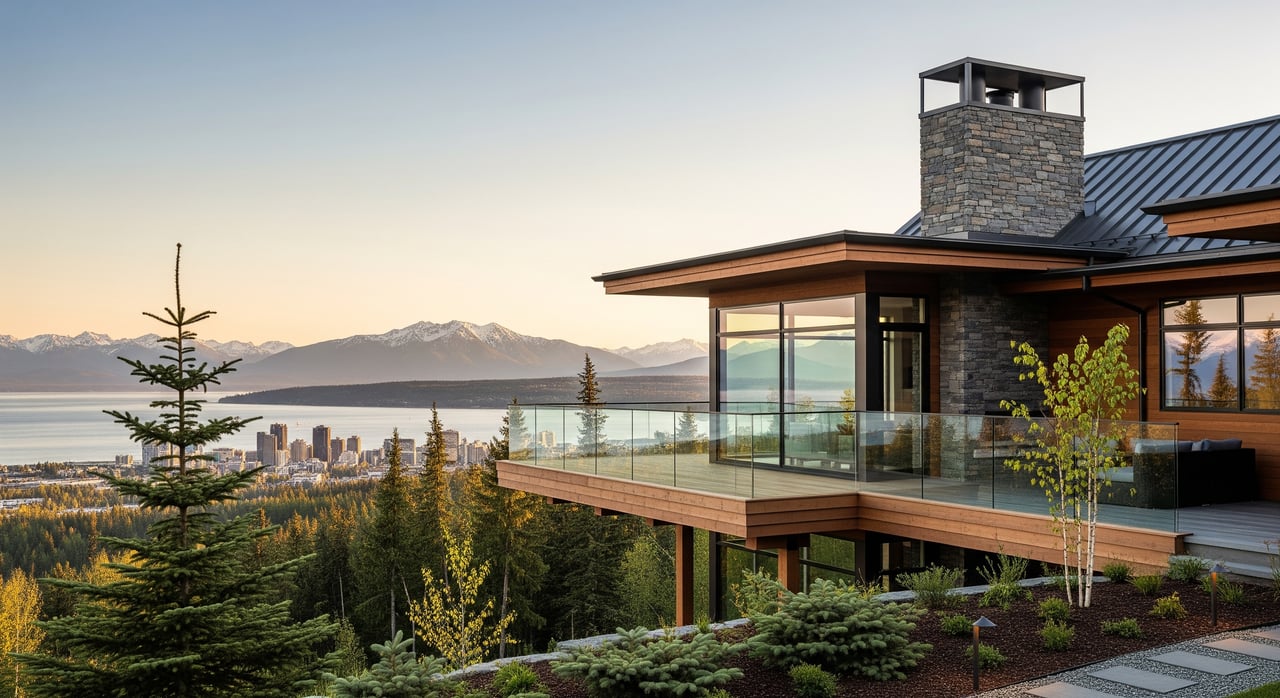
Thinking about a move to Anchorage’s hillside? The views and trail access are incredible, but hillside living asks you to plan for fire safety, heavy snow, and healthy indoor air. If you are looking at South Addition or nearby South Anchorage neighborhoods, you will want a simple, local guide that covers what really matters. This article walks you through defensible space, roof-load awareness, and radon testing, then gives you a printable checklist and local resources to use right away. Let’s dive in.
Why hillside living in South Addition is different
South Addition sits on the hillside south of downtown Anchorage. Many lots have steeper driveways, more exposure to trees and brush, and microclimates that affect snow and ice. Those features offer privacy and Alaska scenery, yet they also add responsibilities.
On slopes, wildfire can move uphill quickly and embers can travel far. Anchorage winters bring drifting snow, ice dams, and uneven roof loads that can stress structures. Hillside soils and bedrock can also release radon gas that enters homes through basements, crawlspaces, or slab cracks. The good news is you can manage these risks with a clear plan and the right local contacts.
Wildfire defensible space: what to know
Why defensible space matters on city hillsides
Defensible space reduces the chance a vegetation fire ignites your home. On slopes, fires burn more intensely uphill, and urban embers can land on roofs and in gutters. Following well-tested guidance from programs like Firewise USA and FEMA’s Ready campaign helps you focus on the few zones that make the biggest difference.
The three defensible space zones
- Immediate zone, 0 to 5 feet: Keep it noncombustible. Prioritize hardscape near the foundation, keep plants small and spaced, and avoid wood mulch against the house.
- Intermediate zone, 5 to 30 feet: Keep it lean, clean, and green. Maintain lower-volume plantings, prune trees, and remove dead material. Separate tree crowns so fire does not move from one to another.
- Extended zone, 30 to 100+ feet: Break up continuous vegetation and remove ladder fuels under trees. On steep slopes, extend spacing because fire behavior intensifies uphill.
You can find additional homeowner guidance through the National Fire Protection Association and state forestry information from the Alaska Department of Natural Resources.
Practical steps for your South Addition lot
- Roof and gutters: Clear needles and leaves often. Screen gutters, check around skylights and vents, and remove debris that could catch embers.
- Trees and vegetation: Prune branches to keep clearance from the roofline. Remove dead trees and brush, thin undergrowth, and avoid continuous fuel bands leading to the home.
- Storage and materials: Keep firewood and propane tanks at least 30 feet from structures, uphill if possible. Store combustibles away from your walls.
- Access and visibility: Maintain driveway clearances for emergency vehicles, trim overhead branches, and post a visible address. Good access helps responders help you.
- Home hardening: When replacing materials, choose Class A roofing. Consider ember-resistant vents and noncombustible decking or soffits where feasible.
Local rules, programs, and permits
Before major vegetation work or any burning, check the Municipality of Anchorage and Anchorage Fire Department pages for current regulations and contacts. Neighborhood Firewise programs may offer assessments or fuel-reduction support.
When to hire a pro
For large trees, steep slopes, or extensive fuel reduction, hire licensed arborists or WUI-experienced contractors. They understand safe practices and local permitting.
Roof-load awareness in Anchorage winters
What stresses hillside roofs
Winter brings heavy snow, drifting, and ice dams. Drifts can pile deep on one area of the roof, and melt-freeze cycles can create dams that force water under shingles. Low-slope roofs, porches, and attached garages can be especially vulnerable.
Design and code basics
Roofs are designed to a code-specified snow load. The exact value depends on local data and the code edition used for your home. To verify design values or evaluate your roof, contact the Municipality of Anchorage Building Safety division through the Municipality of Anchorage site or a licensed structural engineer. Engineers use methods from standards organizations such as the American Society of Civil Engineers to calculate loads and check conditions.
Local weather patterns and wind can shift snow around. For context on seasonal conditions and storms, the National Weather Service provides local weather and climate information.
Warning signs of overload or distress
- New or widening cracks in walls or ceilings.
- Sticking doors or windows that did not stick before.
- Sagging or creaking in the roof or ceiling, or visible bowing in beams.
- Interior water intrusion or signs of ice dams.
If you see concerning signs, evacuate spaces under a sagging area and call a structural engineer or local building officials.
Safe snow removal tips
- Remove snow in stages. Use a roof rake from the ground if possible rather than climbing the roof.
- Do not slide large roof loads onto lower roofs, decks, or carports where the impact could overload those structures.
- Protect skylights and vents while raking, and avoid damaging roofing or attic ventilation.
- For steep roofs, complex geometry, heavy snow, or icy conditions, hire an insured contractor experienced in roof snow removal.
- Reduce ice dams by improving attic insulation and ventilation. Proper insulation and airflow limit melt and refreeze at roof edges.
After a big storm
Walk the exterior and look for unusual sagging, cracks, or deep drifts in corners and valleys. If you are unsure, err on the side of safety and consult a structural engineer or contact local building safety officials through the Municipality of Anchorage.
Radon testing essentials for Anchorage homes
Why test for radon
Radon is a naturally occurring radioactive gas from soil and bedrock. Long-term exposure at elevated levels is a health risk. National guidance recommends testing every home because radon levels vary by lot and even within the same neighborhood. Learn more at the U.S. EPA radon site.
How and when to test
You have two main options:
- Short-term tests, 2 to 90 days: Good for a quick screening, but results can vary with weather and ventilation.
- Long-term tests, 90 days or more: Best for understanding year-round exposure, often using alpha track detectors or continuous monitors.
Follow the kit and lab instructions closely. Place the detector in the lowest regularly used living area. Avoid drafts, exterior doors, windows, and heat sources nearby that could skew results. Alaska-specific guidance and lists of testers and labs are available through the Alaska Department of Environmental Conservation.
What results mean and what to do next
The U.S. EPA recommends taking action if long-term radon results are 4.0 picocuries per liter or higher. Many homeowners also consider mitigation at lower levels to further reduce exposure. The most common fix is active soil depressurization, which vents radon outdoors. Sealing foundation cracks and improving ventilation may be part of the solution, but ventilation alone is rarely enough.
Hire certified radon testers and mitigation contractors, and always retest after the work is complete to confirm lower levels. State contacts and program information are available through Alaska DEC radon resources and the EPA radon site.
Printable readiness checklist
Use this checklist as a one-page handout for your South Addition home. Print it, walk your property, and note what needs attention.
Wildfire and defensible space
- Clear roof and gutters of needles and leaves.
- Remove combustible materials within 30 feet, and move firewood at least 30 feet away and downhill if possible.
- Create a 0 to 5 foot noncombustible zone directly against the foundation.
- Prune tree branches to keep crowns separated and at least 6 to 10 feet from the roofline.
- Remove dead plants and ladder fuels under trees.
- Keep lawn and plantings watered and green during dry season; replace highly flammable plants near the house.
- Ensure driveway access and address numbers are visible for emergency responders.
Snow and roof awareness
- Install and use a roof rake; remove snow from lower edges to limit heavy overhangs and ice dams.
- After heavy storms, inspect for sagging ceilings, new cracks, sticking doors or windows, or unusual noises.
- Keep gutters clear and monitor for ice dams; improve attic insulation and ventilation if ice dams recur.
- Do not climb on steep or icy roofs; hire professionals for steep or complex roofs.
- Keep spaces under porches or attached structures clear if roof sagging is observed.
Radon testing and indoor air
- Order a long-term radon test kit, 90 days or more, or hire a certified tester.
- Place the test in the lowest regularly used living area per instructions.
- If the result is 4.0 pCi/L or higher, contact a certified radon mitigation professional; consider mitigation at lower levels if occupants are at higher risk.
- Keep records of tests and mitigation actions for future resale disclosure.
Emergency readiness
- Create an evacuation plan that accounts for narrow or steep driveways.
- Maintain an emergency kit with food, water, medications, flashlights, and a battery radio.
- Record contractor and engineer contacts for emergency structural and roof support.
Keep records for resale and safety
Documentation helps you and future buyers. Save radon test results, mitigation system details, roof service receipts, and notes on defensible space work. If you make upgrades, keep permits and contractor information. Clear records support disclosure, show care for the home, and provide a roadmap for ongoing maintenance.
Local contacts and next steps
- For building or fire questions, start with the Municipality of Anchorage and the Anchorage Fire Department pages available there.
- For wildfire preparation, review homeowner guidance at Firewise USA and FEMA’s wildfire preparedness page.
- For radon testing and mitigation support, see the EPA radon hub and Alaska DEC for state contacts and certified professionals.
- For structural evaluations and roof concerns, consult a licensed structural engineer. For snow removal and tree work, hire insured, qualified local contractors.
If you want a walkthrough of a specific South Addition property with eyes on hillside considerations, reach out. For neighborhood-level guidance and a plan tailored to your move, connect with Unknown Company.
FAQs
What is defensible space for South Addition homes?
- Defensible space is the managed area around your home that reduces ignition risk, focusing on a 0 to 5 foot noncombustible zone, a lean and clean 5 to 30 foot zone, and reduced fuels out to 100+ feet on slopes.
How do I reduce wildfire risk on a hillside lot?
- Clear roof and gutters, prune trees, separate fuels, move combustibles like firewood at least 30 feet from structures, and maintain driveway access for responders.
How can I tell if my roof is overloaded by snow?
- Watch for new cracks, sagging, creaking, or sticking doors and windows. If you see these signs, clear the area below and call a structural engineer or local building officials.
Who confirms my home’s design snow load in Anchorage?
- Contact the Municipality of Anchorage Building Safety division through muni.org or hire a licensed structural engineer for site-specific evaluation and code guidance.
Should every South Addition home test for radon?
- Yes. The EPA recommends testing all homes because radon varies by lot and structure. Take action at 4.0 pCi/L or higher, and consider mitigation at lower levels as needed.
