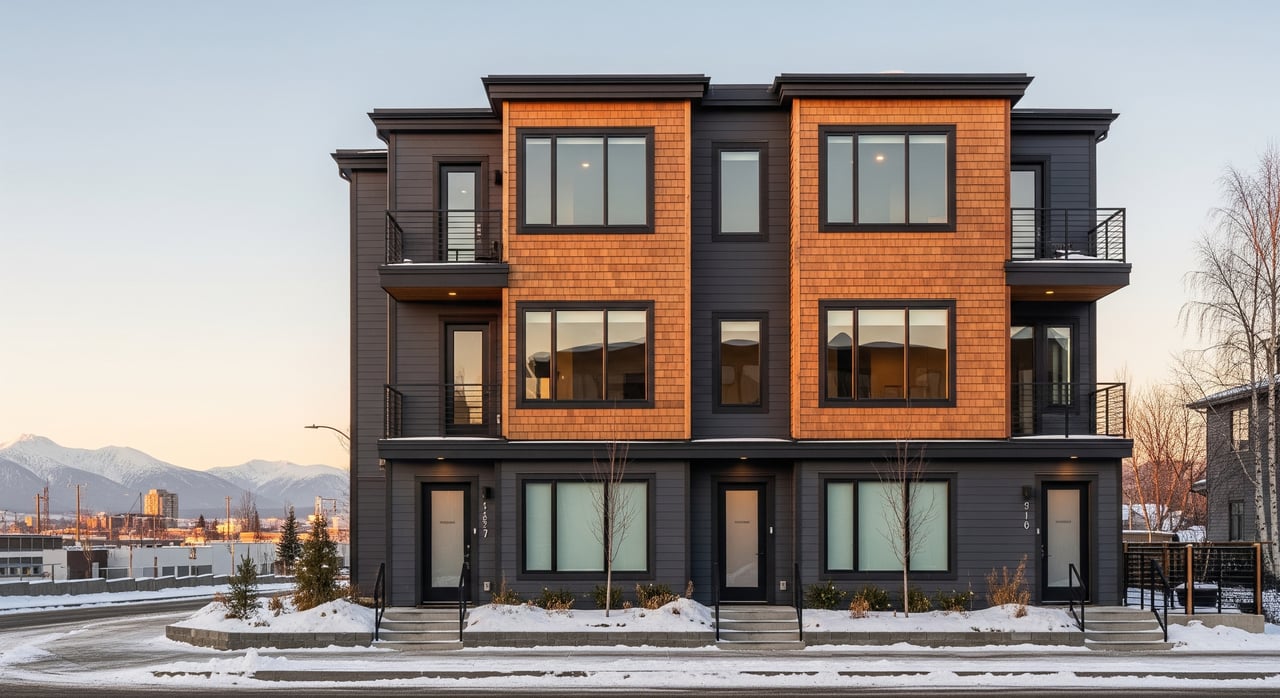
What if your Downtown Anchorage home could help pay for itself? If you’re eyeing a first home and want to lower your monthly cost, house hacking might be your smartest path. You live in one unit of a small multi-unit property and rent the others to offset the mortgage and build equity. In this guide, you’ll learn the financing options, how lenders look at rental income, a simple cash flow model, and what to check during your search and inspection. Let’s dive in.
What house hacking means in Downtown Anchorage
House hacking typically means buying a 2–4 unit property, living in one unit, and renting the others. In Downtown Anchorage, that often looks like a classic duplex with separate entrances and parking. Your goal is to reduce your net housing cost while you build long-term equity.
Because you plan to occupy the property, you can access loan programs designed for primary residences. That can mean lower down payments compared to investor loans. You still need to plan for maintenance, reserves, and realistic rent assumptions.
Financing options for owner-occupants
FHA loans for 2–4 units
FHA loans are popular for house hacking because they allow low down payments on owner-occupied 2–4 unit properties. You must live in one unit, meet program guidelines, and pay mortgage insurance. Lenders often require you to occupy the home for about 12 months.
VA loans for eligible buyers
If you’re eligible for a VA loan, you can buy up to a 4‑unit owner-occupied property, often with no down payment. A VA funding fee may apply, and you still need to qualify based on your income and debts. VA loans do not require monthly mortgage insurance.
Conventional and portfolio loans
Some conventional programs allow low down payments on 2‑unit homes for qualified buyers. Underwriting and availability vary by lender and program. Local banks and credit unions may also offer portfolio loans with flexible terms for owner-occupied multi‑unit properties.
State and local assistance
Alaska Housing Finance Corporation (AHFC) offers borrower education, potential down payment assistance, and program options for qualifying buyers. Program details and availability change, so plan to check current offerings and talk with a lender who regularly finances owner‑occupied small multi‑family.
How lenders underwrite multi‑unit homes
Owner-occupancy rules
Most programs require you to live in one unit as your primary residence. FHA typically expects at least 12 months of occupancy. If your plan changes, talk with your lender before you move or convert units.
Using rental income to qualify
Many lenders will count a portion of documented rent from the other unit(s) to help you qualify. A common practice is to use part of the market or existing rent, often around 75 percent, if supported by a lease or appraisal. Exact treatment varies by program and lender.
Reserves, mortgage insurance, and appraisals
Multi‑unit purchases can require extra reserves. Low‑down loans add mortgage insurance until you reach enough equity, while VA uses a funding fee structure instead of monthly mortgage insurance. Appraisals for multi‑unit properties may include an income approach and rent analysis.
Key metrics you should know
- Gross Potential Rent (GPR): Total rent if all units are rented.
- Effective Gross Income (EGI): GPR minus vacancy and credit loss.
- Operating Expenses: Taxes, insurance, owner‑paid utilities, maintenance, management allowance, supplies.
- Net Operating Income (NOI): EGI minus operating expenses, before the mortgage.
- Debt Service: Annual principal and interest on your loan.
- Cash Flow: NOI minus debt service.
- Cash‑on‑Cash Return: Annual cash flow divided by cash invested.
- Debt Service Coverage Ratio (DSCR): NOI divided by annual debt service. Investor loans use DSCR; owner‑occupied loans usually focus on your debt‑to‑income ratio.
Downtown Anchorage pro forma example
These figures are illustrative only. Update pricing, rates, taxes, insurance, and rents with current local data before you buy.
Assumptions (duplex):
| Item | Amount |
|---|---|
| Purchase price | $400,000 |
| Loan type | FHA, 3.5% down |
| Down payment | $14,000 |
| Loan amount | $386,000 |
| Interest rate | 6.5% fixed, 30‑year |
| Monthly P&I | ~$2,440 |
| Market rent per unit | $1,500 |
| Gross potential rent | $3,000/mo = $36,000/yr |
| Vacancy/collection loss | 5% |
| Effective Gross Income (EGI) | $34,200/yr |
| Operating expenses (est. 35% of EGI) | $11,970/yr |
| Net Operating Income (NOI) | $22,230/yr |
| Annual debt service | ~$29,280 |
| Estimated annual cash flow | -$7,050 |
What this means: with a low‑down FHA loan at this example rate, rents may not cover the full payment. You would live in one unit, collect rent from the other, and pay the shortfall while gaining housing, principal paydown, and potential appreciation.
Sensitivity ideas:
- A larger down payment or lower rate improves cash flow.
- Better rents, lower expenses, or a lower purchase price help.
- Separating utilities so tenants pay more of their usage can reduce your operating costs.
Finding the right property Downtown
Smart search filters and alerts
Use multi‑family filters for 2–4 units and add keywords like “duplex,” “separate units,” and “basement apartment.” Focus on separate entrances, off‑street parking, and signs of utility separation. Set alerts for new listings and price changes because small multi‑family can move quickly.
Inspection priorities in Alaska’s climate
- Separate utilities: Gas, electric, and water metering, plus separate heating systems, simplify billing and reduce disputes.
- Heating and efficiency: Oil, natural gas, or electric systems should be in good working order. Insulation and ventilation matter in cold weather.
- Plumbing and sewer: Downtown Anchorage is largely on municipal service, but verify. Consider a sewer scope if the property is older.
- Electrical capacity: Older panels may not support modern demand across multiple units.
- Moisture and ventilation: Watch for condensation and mold risks in tight building envelopes.
- Structure and seismic: Alaska is seismically active. Review roof, foundation, and any retrofit history.
- Life safety: Smoke and CO detectors, proper egress, and compliance with multi‑unit codes.
- Parking and storage: These are meaningful amenities for Downtown tenants.
Local rules, costs, and risk planning
Confirm zoning supports multi‑unit use and that any prior conversions were permitted. If you plan to explore short‑term rentals, review municipal regulations and lodging tax rules. Factor in energy costs and consider earthquake insurance as part of your risk plan. Review Alaska landlord‑tenant law for deposits, notices, and habitability standards.
Managing tenants and budgeting
Create consistent screening and documentation that aligns with fair housing rules. Keep signed leases and track deposits. Budget for routine and capital repairs with an annual reserve. If you prefer not to self‑manage, expect professional management fees to run about 8–12 percent of collected rent, depending on services.
Due diligence checklist
- Confirm zoning and permitted uses with the Municipality of Anchorage.
- Request rent roll, current leases, and at least 12 months of expense records.
- Hire a licensed inspector experienced with Alaska multi‑unit homes; consider sewer camera and heating system evaluations.
- Ensure the appraisal supports rental income if your lender plans to count it.
- Verify lease terms, deposits, and upcoming turnover that could affect near‑term cash flow.
- Confirm utility metering and who pays which utilities.
- Get quotes for insurance, including an earthquake rider if desired, and review property tax history.
- Review short‑term rental rules if you plan to consider STR income.
- Budget for immediate repairs and keep 6–12 months of operating reserves.
Your next steps with a local guide
- Talk to a lender who regularly finances owner‑occupied 2–4 unit properties and learn which programs you qualify for.
- Connect with a real estate agent who knows the Downtown Anchorage multi‑family inventory.
- Pull rent comps from multiple sources to set realistic expectations by unit type and condition.
- Run a simple pro forma. Change purchase price, down payment, rate, rents, vacancy, and expenses to see how cash flow shifts.
- Walk properties with an inspection checklist that emphasizes utilities, heating, and deferred maintenance.
- If using FHA or VA, confirm occupancy requirements and how your lender will count rental income.
House hacking in Downtown Anchorage can lower your cost of living and put you on a faster path to equity. If you want a clear plan, current comps, and on‑the‑ground guidance tailored to Anchorage, reach out to Emma Shibe. Let’s connect.
FAQs
Can I use an FHA loan to buy a duplex in Anchorage and count rental income?
- Many lenders allow a portion of market or existing rent from the other unit(s) to help you qualify with FHA, typically after it is documented by a lease or appraisal. Exact rules vary by lender and program.
How long must I live in the unit with FHA or VA financing in Anchorage?
- Owner‑occupant programs generally expect you to occupy the home as your primary residence, and FHA commonly expects at least 12 months of occupancy; confirm specifics with your lender.
Will duplex rents in Downtown Anchorage fully cover the mortgage with a low down payment?
- Not always. At a sample price and rate, cash flow can be negative with low‑down financing; higher down payment, better rents, or lower expenses can move you toward break‑even.
What are the biggest inspection red flags for multi‑unit homes in Alaska?
- Pay close attention to heating systems and efficiency, moisture and ventilation, electrical capacity, plumbing and sewer condition, seismic resilience, and life‑safety compliance.
Are short‑term rentals allowed in Downtown Anchorage, and are they worth it?
- Anchorage has rules and lodging tax requirements for short‑term rentals; review municipal regulations first and remember STRs often come with higher operating costs and active management.
How do lenders verify the rental income from the other unit(s) in Anchorage?
- Lenders typically use an appraisal rent schedule and/or signed leases to document rent, and they may count only a portion of that income toward qualifying.
What Alaska programs can help with down payment or education for house hacking?
- Alaska Housing Finance Corporation offers borrower education and may provide assistance options for qualifying buyers; check current programs and availability.
How should I price rents for a Downtown Anchorage duplex?
- Pull comps from multiple sources and adjust for unit size, condition, parking, utilities paid, and location; verify with recent local listings and, if needed, property managers.
